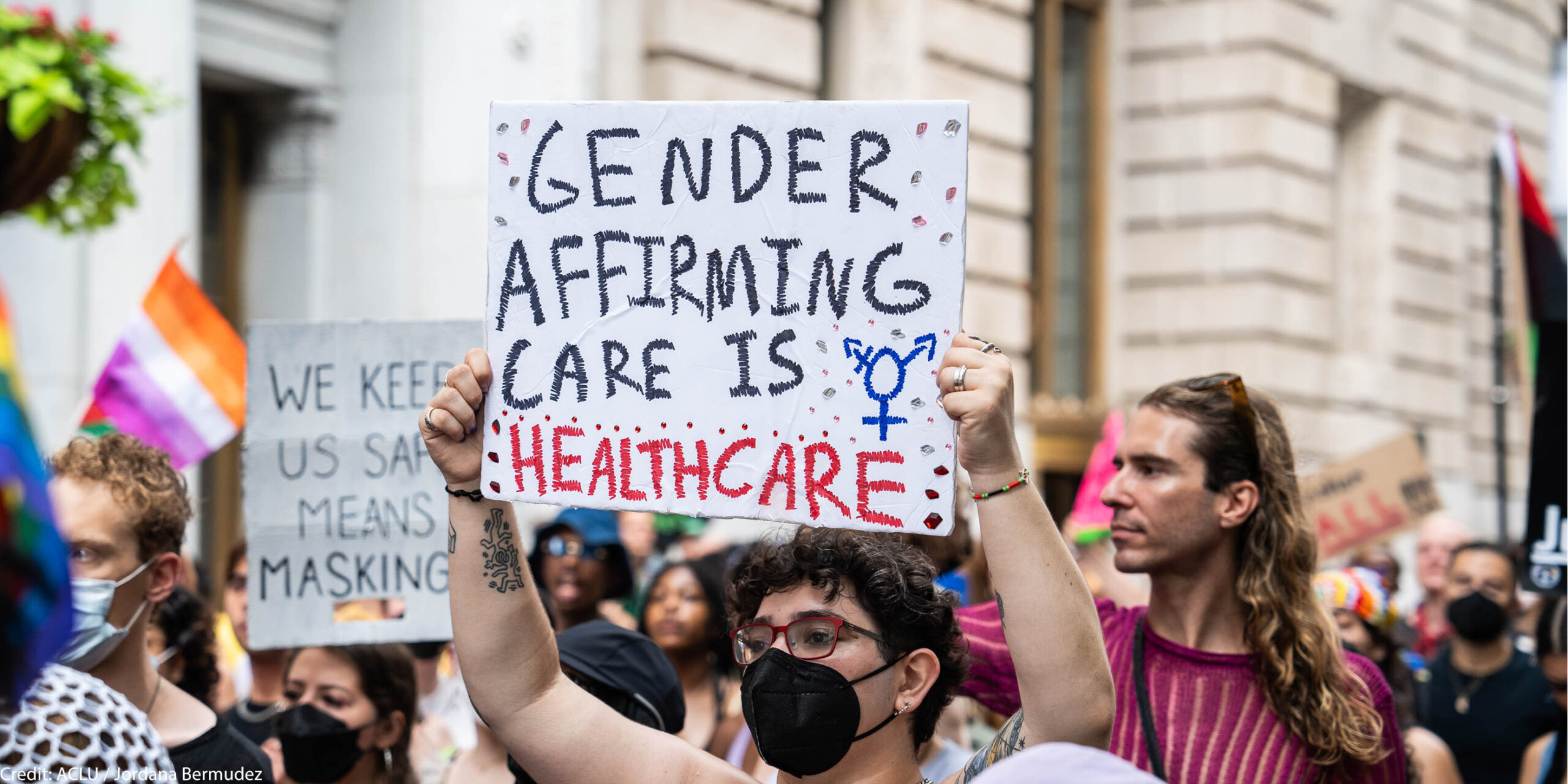
In an era marked by fierce debates over identity, rights, and the very essence of selfhood, the battle over gender-affirming care stands as a profound test of feminism’s principles. To challenge access to such care is not merely a fringe disagreement — it is a brazen assault on bodily autonomy itself. Feminism, at its core, advocates for the inviolability of individual agency, especially over one’s own body. The current cultural and legislative onslaught against gender-affirming healthcare reveals a disturbing contradiction within contemporary feminist discourse, making it imperative to dissect the multifaceted dimensions of this critical issue.
The Foundations of Feminism and Bodily Autonomy
Feminism emerged as a fierce rebuttal against patriarchal control, championing the unequivocal right of women to govern their bodies free from external mandates. This foundational tenet extends beyond cisgender women, embracing all individuals’ sovereignty over their physical and psychological selves. Feminism’s ethos demands the recognition that gender is not a rigid binary, but rather a spectrum of identities deserving respect and validation. Denying access to gender-affirming care undermines these principles by imposing arbitrary restrictions on who can access medical interventions vital to their identity and wellbeing.
Gender-Affirming Care: More than Medical Treatment
At first glance, the term “gender-affirming care” may evoke narrow images of surgeries or hormone therapies. Yet, this care encapsulates a holistic approach to health — psychological counseling, social support, puberty blockers, hormone replacement therapy, and surgical interventions are all critical components. It offers transgender and nonbinary individuals the means to align their physical selves with their internal sense of identity. Depriving individuals of such care is tantamount to negating their existence and invalidating their lived experiences.
The Legislative and Cultural Siege on Gender-Affirming Care
Across many societies, a tempest of legislative measures aimed at restricting or outright banning gender-affirming care has emerged. These laws often target minors, wielding misguided claims of “protecting children” while ignoring expert consensus on the safety and necessity of such interventions. The cultural narrative fueling these restrictions is steeped in fear, misinformation, and often, an ideological resistance to expanding definitions of gender. This fight is not just about healthcare policies — it is a battleground where autonomy and identity collide with authoritarianism.
Feminism’s Role in Defending Trans Rights
True feminism cannot thrive in exclusion; it must be intersectional, inclusive, and unapologetically steadfast in defending all expressions of gender freedom. Transgender women, in particular, face a precarious position where feminist advocacy is often contested or diluted. Embracing gender-affirming care as a feminist issue means repudiating gatekeeping narratives that police who deserves bodily respect and who doesn’t. A feminism that ignores or marginalizes trans rights contradicts itself, perpetuating the very oppression it vows to dismantle.
The Psychological Imperative of Affirming Care
Beyond politics and ideology lies the undeniable psychic terrain of those denied gender-affirming care. The absence of support not only exacerbates gender dysphoria but precipitates profound mental health crises — anxiety, depression, and tragically, suicidal ideation. Affirming care serves as a lifeline, fostering self-acceptance and psychological resilience. Feminism, committed to dismantling systems of harm, must elevate the voices of those who live this reality daily and oppose any measures that threaten their mental and physical wellbeing.
The Intersection of Feminism and Medical Ethics
Medical ethics enshrines principles such as autonomy, justice, and beneficence. Gender-affirming care aligns seamlessly with these doctrines, advocating for treatments that improve quality of life and respect patient agency. Disallowing or restricting such care amounts to a violation of medical ethics, subjugating individual needs to the whims of political agendas. Feminism, known for its critical engagement with power dynamics, must confront how healthcare systems and policies can be weaponized against marginalized groups, including transgender people.
The Cultural Misconceptions That Fuel Opposition
Much of the backlash against gender-affirming care is fueled by myths — unfounded fears that children are rushed into irreversible decisions, or that such care is experimental and dangerous. These misconceptions ignore decades of empirical research and lived experience demonstrating that gender-affirming care is a medically sound, reversible, and often life-saving intervention. Feminism’s intellectual rigor demands a confrontation with these fallacies, rejecting rhetoric that seeks to sow doubt and delay essential care.
The Future of Feminism: Embracing a Radical Inclusivity
To move forward, feminism must evolve beyond narrow frameworks that inadvertently perpetuate exclusion. Radically inclusive feminism recognizes that bodily autonomy is not a privilege handed out selectively but a universal human right. Protecting access to gender-affirming care means fighting for the liberation of all genders — a commitment that enshrines empathy, justice, and unwavering respect for self-determination. It is a call to arms against all forces that seek to cage the complexity of human identity under archaic and oppressive paradigms.
A Call to Action: Defending Autonomy in All Its Forms
The assault on gender-affirming care is a clarion call — a stark reminder that bodily autonomy remains contested ground. Feminism’s promise lies in its power to unify diverse struggles against control, discrimination, and violence. This moment beckons activists, allies, and advocates to rally with renewed vigor, illuminating that feminism’s true power resides in protecting the selfhood of every individual. The fight for gender-affirming care is, unequivocally, the fight for feminism’s soul.