

















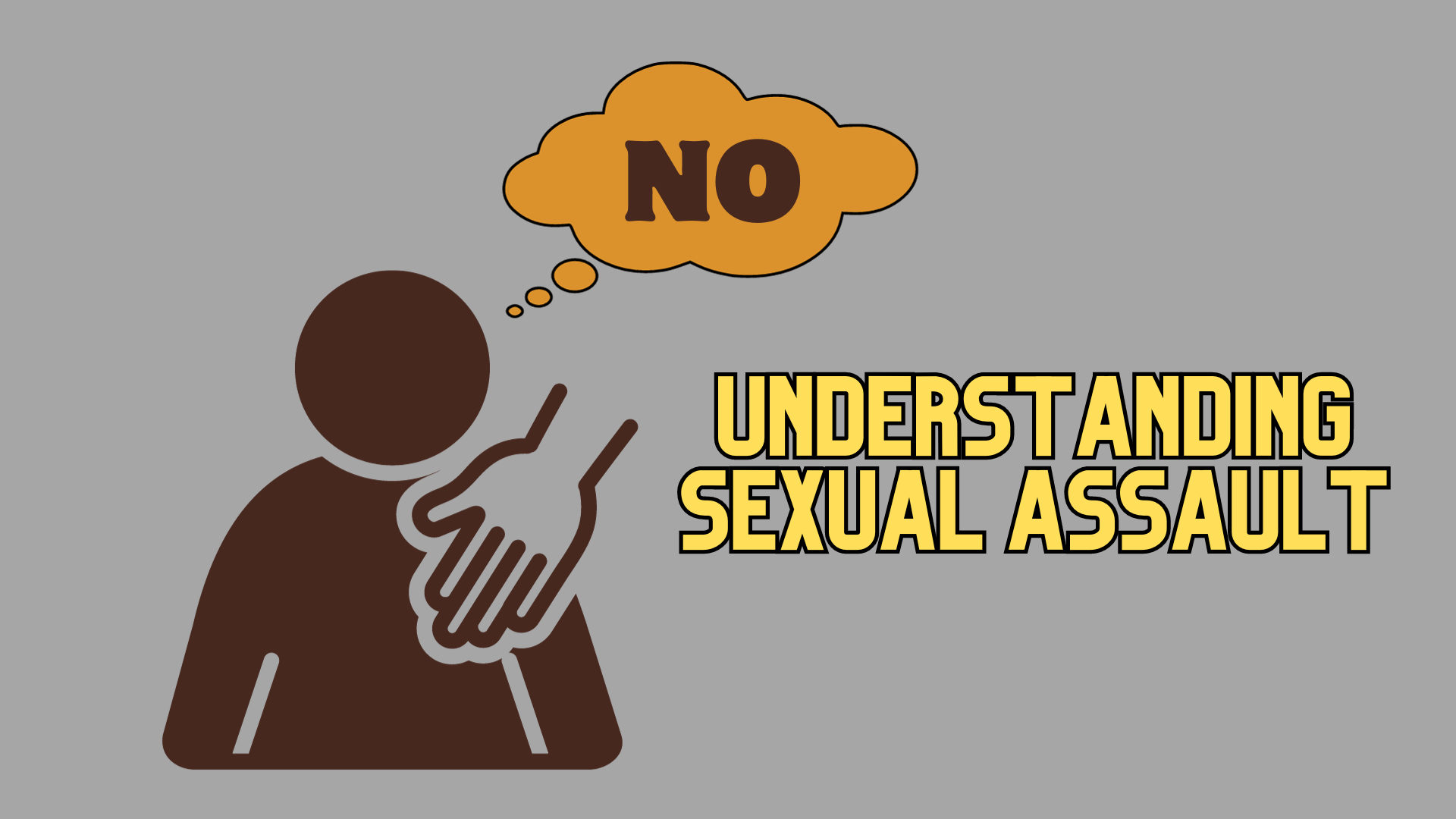
What if I told you that the most violent crime of the modern era isn’t committed behind bars—or in war zones— but in the flickering fluorescent glow of gym lockers, late-night alleys, and the supposed sanctity of the home? What if the weapons weren’t rifles or guns, but the invisible chokers of stigma, silence, and societal complicity? This is the unspoken calculus of sexual assault: not a statistical anomaly, but a systemic reality disguised as misplaced shame. We call it rape; we call it assault—but the audacity lies in treating it as something other than what it is: war without cease, a violent act weaponized against the vulnerability of the body, the soul, and the shared humanity of its victims. The question we must confront isn’t so much *why it happens*, but *why the world hasn’t torn itself apart addressing it like the seismic event it is*. This isn’t about numbers or laws—it’s about the slow, creeping indifference that normalizes brutality, leaving women and marginalized bodies to bear the cost of our collective failure to wake up.
—
The Language of Violence: Why Terms Fail Where Words Fall Silent
Consider the ordinary: someone’s story—a whispered confession, a trembling exhale over coffee—about the “ouch,” the bruising weight of someone’s body between theirs and the mattress, the aftershock of teeth marks and trembling. Now ask yourself: which words you’ve heard used to describe this—“affection gone wrong,” “a misunderstanding,” “passionate”—how many of them sound more like apology than acknowledgment? The lexicon of sexual violence is a minefield. We use terms like *assault* or *harassment* with almost clinical detachment, as though they’re categories of parking infractions rather than acts that rewrite the physical trajectory of those who experience them. Yet, look closer at the origin of these terms, and you’ll find they are linguistic relics from battles fought and lost long before the body even hit the ground.
“Assault” carries no blood in its letters. “Rape” is stripped of the gut-wrenching reality it once carried—the word originates from Latin *rapere*, meaning to seize, to snatch, but it also echoes the same verb that means *to drag* or *to forcibly take away something precious*. Why, then, do we reduce it to a medical procedure or judicial slur rather than a calculated act of bodily terror? Perhaps because naming violence as what it is—an invasion not of morals, but of flesh and spirit—requires a reckoning with the very architecture of our society, where rape culture isn’t just tolerate; it’s codified as *inevitable*.
The truth is, many victims of sexual violence describe it as a formative trauma that isn’t so much remembered as *known*. Their bodies carry maps. The language we have fails to do justice to its scale because it doesn’t interrogate the environment that makes it possible—where a woman is told again and again to shrink, to apologize for her posture, her voice, even her own shadow. So we adjust the name, but never the violence. We talk of assault as a technicality, not as it’s felt: a bodily seismograph, registering every shudder of the earth beneath us for years after the quake has passed.
—
The Body: The Battlefield of Unseen Wars
Sexual assault is an intimate war without flags. No missiles rain down from the sky; there are no battle cries that ripple through the valley. Instead, the assault is a slow unraveling of safety. The victim’s body becomes the front line—where the aggressor’s hands are the weapons, their gaze a cannonade that reduces limbs to property. Think of the night a woman leaves her car keys locked in her house to face the night alone. Think of a girl being taught at an early age the sound of a car door unlocking might not be freedom, but warning: that your body isn’t yours to occupy, not here, not like this, not ever.
Sexual assault isn’t a single bludgeoning of the limbs; it is a war of attrition, a systematic unraveling of autonomy. The moment someone says “no” becomes a minefield for their own credibility, where their memory of it, the clothes they wore, the whiskey they drank—these are not the tools of recap—they’re evidence in a trial where the victim, by default, *assumes the burden of proving their own survival*.
We speak of assault as if it’s a one-time event—an oops, a hiccup, a “freak occurrence.” But in truth, it is a chain reaction: first the normalization of entitlement, then the gaslighting of the victim when she describes it, then the societal shrug as another woman reports an attack to the “blue light” of law enforcement that has become an afterthought. The assault isn’t just between two bodies; it’s the interplay of a culture that insists pleasure is permission, and pain is somehow inconsequential.
—
The Audit of Indifference: Where Society Fails as Infrastructure
If sexual violence were a dam, it is a dam that’s been slowly rotting for decades. We build levees of laws, policies, and awareness campaigns to protect women—but the dam leaks. We talk about “consent” like it’s a lesson taught in kindergarten, when in reality, it’s a lesson in how not to be raped: watch your drink, travel in pairs, dress modestly—or as they’re now saying, *dress to resist*. The logic is absurd on its face: women aren’t being told how not to be raped, but how not to exist.
The system is built on half-truths. It doesn’t consider the fact that 91% of respondents to the CDC survey on rape found offenders to be someone they know, someone they were expected to trust. It doesn’t adequately account for the fact that the average woman will experience sexual violence before she graduates high school if she is white, and that her body of color will make her a target long before graduation day. It doesn’t consider that the majority of rapists have not been convicted—or that most victims who speak up are ignored.
This isn’t a cultural lag—it’s a systemic failure. We’re auditing our hospitals, universities, and corporations for inclusivity, for accessibility, but what about auditing the most intimate spaces—the places where women sleep, where they commute, their bodies as a terrain that doesn’t feel safe. The issue is not a lack of enforcement, but a lack of accountability for the very concept that someone’s safety could be so casually exchanged for convenience, for status, for the illusion of power.
—
Revolution, Not Reform: Why We Name the Unnameable
The crisis with language around sexual violence isn’t just an omission; it is a refusal to name the unnameable. If we called it war, not crime; if we spoke of it in terms of genocide rather than statistic—there might begin to be a reckoning. If we were honest, we might stop pretending this is an issue of “bad apples” or “personal behavior” and demand the infrastructure of patriarchy be dismantled—where power is the unspoken prerequisite to assault. Because let’s not pretend for one second that the aggressor isn’t the beneficiary of this system, that their violence hasn’t already paid them a wage of power, of dominance, of the unthinkable privilege to use their body as tool.
We need a new kind of narrative—one that doesn’t ask for incremental change but for a paradigm shift. Where words like “assault” or “rape” are synonymous with “violation” rather than “statistical abnormality.” Where the question isn’t *Do we need to do more?* but *Have we stopped doing something fundamental?* And until then, the violence is not a crime—it’s a culture’s collective will to ignore its own reflection in the shattered windows of female existence.
The fight isn’t for permission. It is for recognition. Not as victims. As human.